State of the Economy
Economic and market uncertainty has heightened, with the plethora of policies being brought forth by the Trump administration.
President Trump has had 4 years of experience and 4 years to prepare. He obviously knows his way around Washington.
From tariffs to Gaza, investors and economists are attempting to glue the pieces together forecasting 2025 and beyond.
The Federal Reserve’s job has been made more challenging as we do not know whether Trump’s policies will further stimulate growth, possibly increasing inflation, or cause economic growth to slow, or somewhere just right.
With so much in the mixer, unexpected consequences should be on the radar. These consequences may be either negative or positive.
For example, will we obtain better economic trade deals stimulating the US economy? Or will other countries attempt to collateralize their resources to start a true, lasting trade war? The answer is unknown, at least for the time being.
For the stock market, the rubber hits the road based on the direction of corporate profits. If profits are forecast to rise, stocks tend to move higher. When investors believe that profitability will shrink, we tend to see downward pressure. For the time being, the markets remain resilient, the economy is adding jobs, albeit at a slower pace, the unemployment rate remains low, and consumers are still spending.
Corporate profits for the first 60% of the S&P 500 companies reporting this quarter have experienced an average of 16% earnings growth. So far so good!!
Technology Sector: Worst Performing Sector
It is no secret, the technology sector has pushed the overall market significantly higher in 2023 and 2024. With the first 5 weeks of the trading year in the rear-view, technology ranks last of the 11 S&P 500 sectors, down (2.24%) year-to-date. The other sectors are positive with Financials leading the way, moving higher by over 7%. Consumer discretionary was the only other sector close to the red line, rising just .93%.
It is common for one sector of the market to outperform and lift the markets, However, sector leadership can alter.
In the current environment, maintaining a portfolio that is diversified and well-allocated in concert with your time horizon and risk tolerance is prudent. Markets leaders and laggards shift, often without notice.
Because of their narrow focus, investments concentrated in certain sectors or industries will be subject to greater volatility and specific risks compared with investing more broadly across many sectors, industries, and companies.
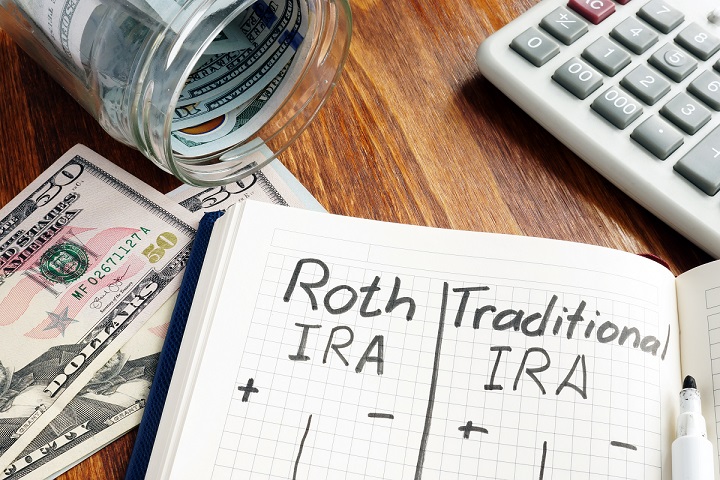
Should You Do Roth Conversions?
Imagine you are in your mid-70’s or 80’s. You have a portfolio of investments you can access without having to consider Uncle Sam? Money for travel, entertainment, gifting etc. Is it possible income tax rates rise in the future, consuming a larger share of your wallet?
Qualified distributions from Roth IRA’s are free of Federal/State Income Taxation and will not negatively impact other areas of your tax return or even influence your Medicare Part B and D premiums.
For many of our clients, modeling Roth conversions have opened their eyes. When a client sees a projection of their tax return for the coming year with, and without the conversions, it helps facilitate good decision making.
Clients who retire prior to the age of the Required Minimum Distributions starting are good candidates for a Roth Conversion Strategy.
There are many other circumstances clients can benefit from enjoying a Roth Conversion Strategy.
Feel free to share our retirement blog with friends, family and colleagues.
The opinions voiced in this material are for general information only and are not intended to provide specific advice or recommendations for any individual. All performance references is historical and is no guarantee of future results. All indices are unmanaged and may not be invested into directly.
Traditional IRA account owners have considerations to make before performing a Roth IRA conversion. These primarily include income tax consequences on the converted amount in the year of conversion, withdrawal limitations from a Roth IRA, and income limitations for future contributions to a Roth IRA. In addition, if you are required to take a required minimum distribution (RMD) in the year you convert, you must do so before converting to a Roth IRA.